In development to provide active lower-back assistance during lifting and repeated bending.
Industrial wearable robotics
Active back-support exoskeletons for industrial work.
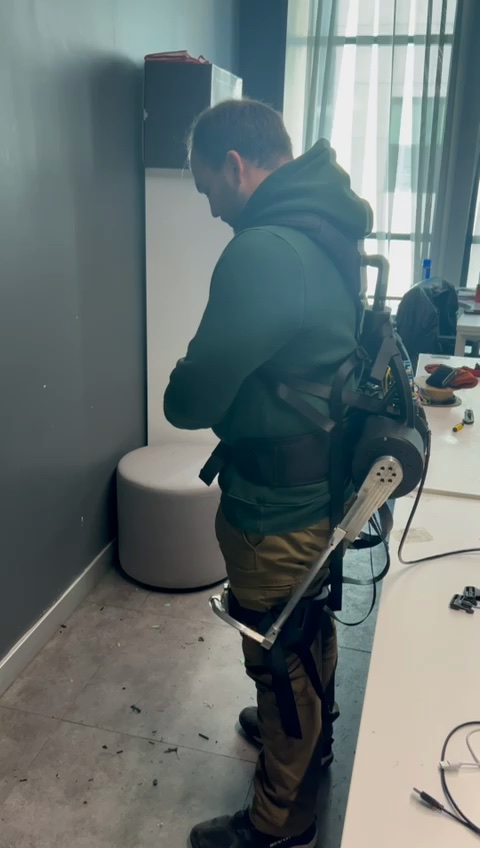
We are developing V-UP to assist the lower back during repeated lifting and bending. Its adjustable fit and independent leg linkages are designed to accommodate the wearer's movement.
Product status: working engineering prototype; testing continues
V-UP
What does V-UP do?
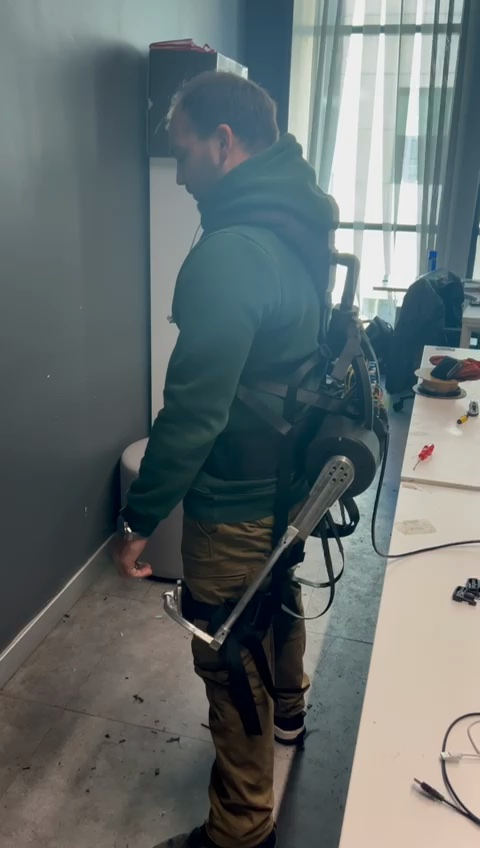
V-UP combines a harness worn over workwear, waist-mounted motors and linkages that connect to the upper thighs. The mechanism is designed to transfer assistance during trunk movement. Controlled tests of the current prototype evaluate bending, rising and walking.
- Supports lifting, carrying and repeated bending workflows
- Adjustable structure for different user heights
- Developed through prototype testing and engineering verification
Actual test record
Watch the V-UP prototype in motion.
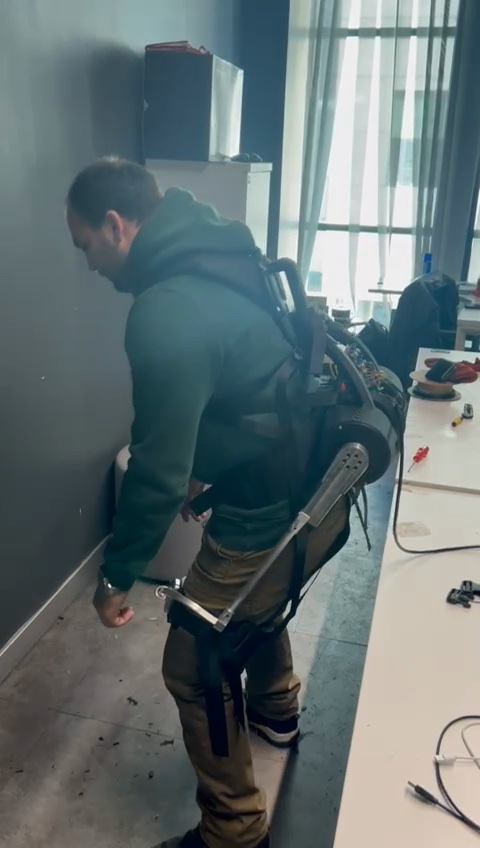
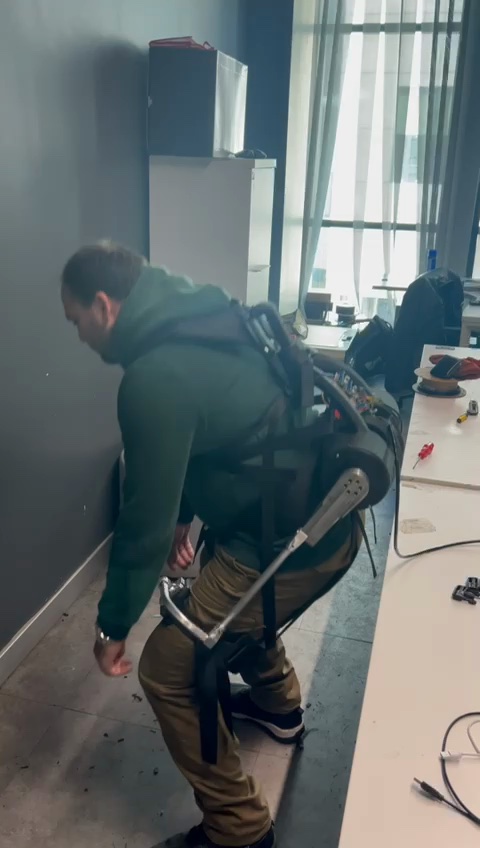
This recording shows a user wearing the V-UP engineering prototype during bending, rising and walking tests. Explore how it moves, then tell us which tasks you would like to assess in your workplace.
Prototype movement test: standing, bending, rising and walking.
Transparent product status
V-UP development status
Current prototype architecture, R&D support and technical specifications under evaluation.
- Product type
- Active lower-back-support exoskeleton R&D platform
- Development stage
- Engineering prototype; subsystem and user-worn movement tests continue
- Public R&D support
- TÜBİTAK TEYDEB 1501 — V-UP(S)
- R&D collaboration
- Adatech and Karadeniz Technical University
- Intellectual property
- Lumbar-support mechanism presented as a PCT application process—not as a granted patent
- Commercial specifications
- Support capacity, system weight, battery duration and certifications will be published after verification
Use cases
Which tasks could V-UP suit?
Logistics
Warehousing, order preparation and repeated load handling.
Manufacturing
Material handling, line-side lifting and assembly support.
Maintenance
Vehicle, machine and field-service tasks with demanding postures.
Field operations
Task-specific support for repeated physical work outside fixed stations.
Vitruvex Blog
Practical guides for evaluating an industrial exoskeleton.

1501V-UP(S)
1507V-NEURO
Supported R&D
Two R&D programmes. Two distinct applications.
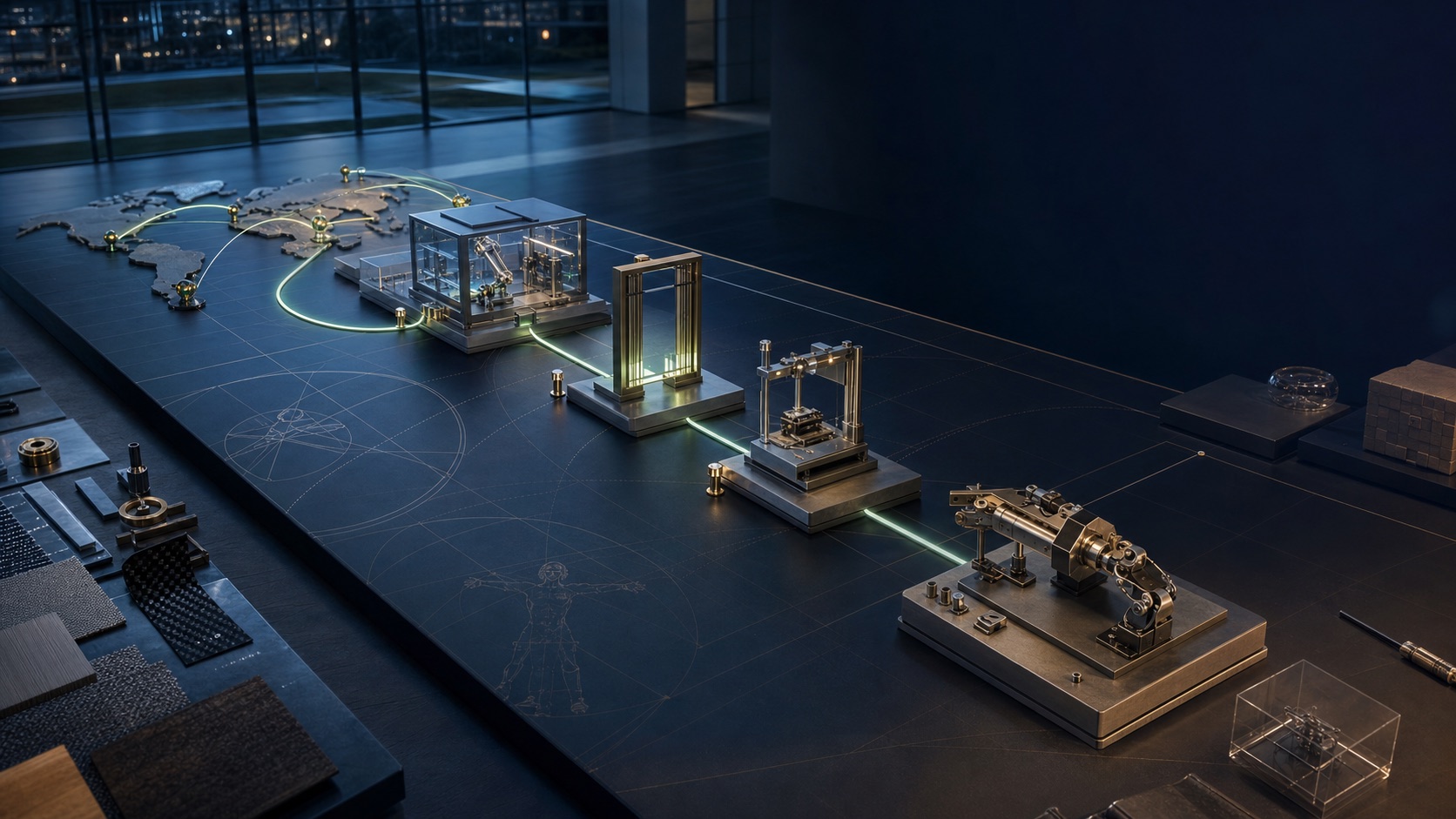
TÜBİTAK TEYDEB 1501 supports the V-UP(S) industrial active exoskeleton R&D program. The 1507 program supports V-NEURO, a brain–computer-interface-based rehabilitation and communication R&D system.
View company milestones ↗Questions about V-UP
What is V-UP being developed for?
V-UP is being developed to provide active lower-back assistance in industrial tasks involving lifting and repeated bending. Suitability depends on the task, user and working environment.
What is V-UP's current development stage?
V-UP is a working engineering prototype. Controlled movement tests and technical validation are ongoing. The prototype footage does not represent a complete set of final commercial product specifications.
How much assistance does it provide, and how long does the battery last?
Validated commercial values for assistance, weight and battery duration have not yet been published. Share your intended task to discuss the technical evaluation process.